The Day the Boat Almost Won
By Evi Goossens — travel storyteller & creative freelancer
Koh Tao, Thailand, December 2023
Reading time: 5 minutes
Five boats sank this week, two capsized. Under the blazing sun, travel photographer Evi Goossens and seasoned backpacker Nina Wind wait their turn for this floating coffin. A random Thai man hands them a small yellow travel pill. It looks like an ecstasy tablet from a techno festival. Ready for a crazy trip, I guess?
Like a true backpacker, I try to lie down in a comfortable, stable side position on the hot asphalt of Chumphon Harbor, Thailand. Nina and I have been traveling across Asia for months on a tight schedule. Today, we need to catch the boat to Koh Tao to arrive on time for Christmas and New Year.
“Did you know another boat sank this morning?” she asks. I widen my eyes. “Yeah, and one capsized yesterday,” she continues. I already feel a lump in my throat. I’m not even on the boat yet, and I’m already nauseous.
At the time, I didn’t know that according to the 2023 Safety & Shipping Review, 38 large ships are lost worldwide each year, with Southeast Asia topping the list. Maybe it’s just as well I didn’t know…
Before my mind can spiral further, the Thai tour operator shoves the yellow pill into my hand. “Is for seasickness.” As if he could see my face turning green. It’s supposed to be a travel pill, but who knows? Could be anything.
Before I have time to think, the boat horn sounds. Time to board. With doubts and sweaty palms, I push the pill through its aluminum wrapper and pop it into my mouth. Here goes nothing.
Once on board, we still have plenty of seating options. In my head, your choice of seat on a boat matters—especially one that might sink or capsize. Not in the middle… can’t escape quickly there. Not the front… too crowded. Side by the window it is.
I grab Nina’s hand, and we say a quick little prayer before leaving the harbor. My eyes start to close, and the gentle rocking of the boat almost lulls me to sleep. So yes, it really is a travel pill—it’s working.
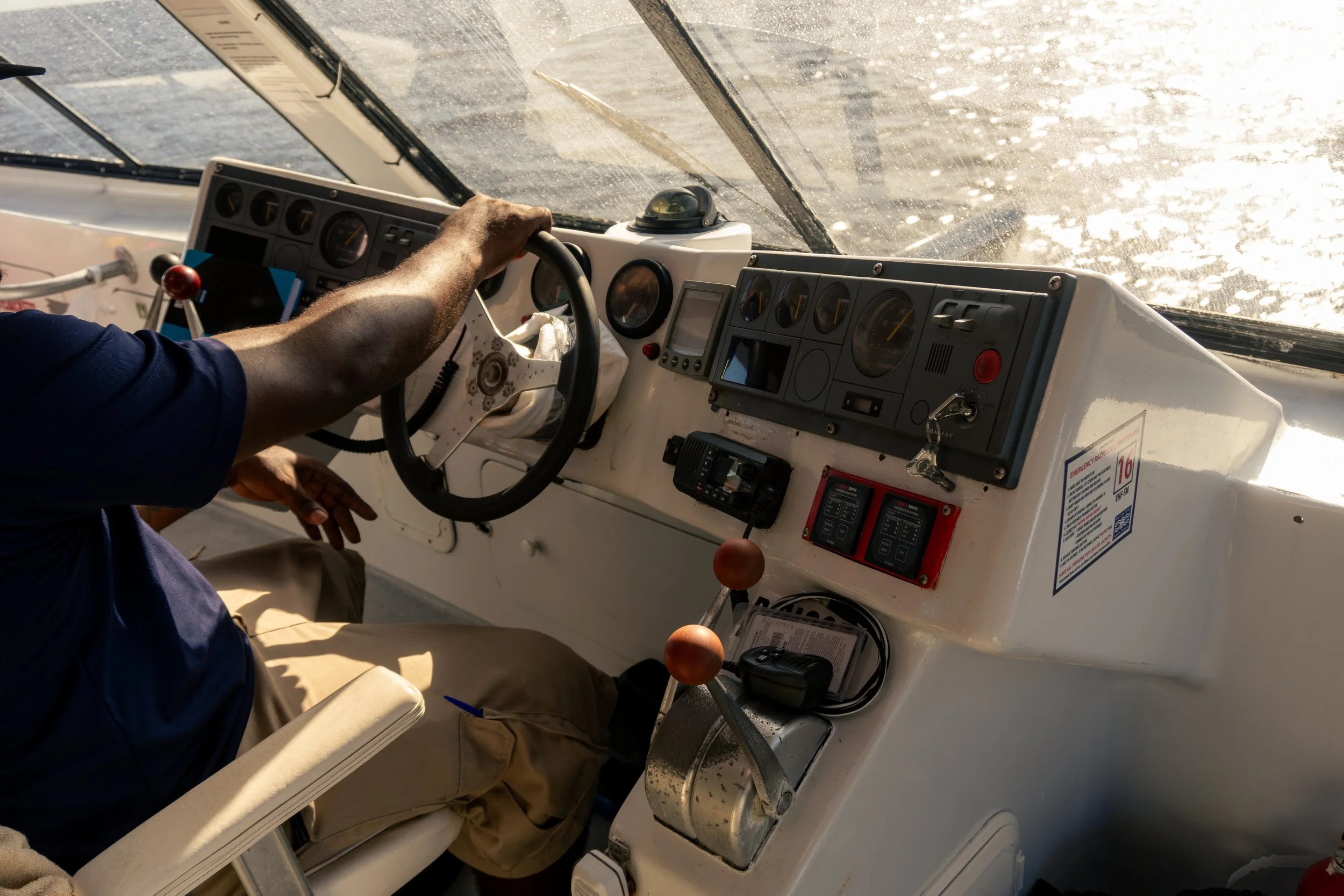
Until the sea gets rougher. I wake from my doze and look outside, barely recognizing the water through the spray. My stomach feels like it’s in constant free fall—the waves are that high.
People start screaming. Some from fear, others from… well, vomiting their souls out. Nina squeezes my hand tightly. I feel her heartbeat and trembling, trying to laugh away my nerves.
Think practically, Evi, I tell myself.
How long can a boat tilt before it capsizes?
How long can I hold my breath if it does?
I grab my phone to distract myself. Google Maps showed our position not long ago, but now there’s no signal. Can I swim that last stretch if we sink?
I tug at a crew member’s jacket. “Is this normal?” He looks at me, grins… and walks away. That doesn’t reassure me.
I want to think about what to do in an emergency, but the vomiting passengers keep pulling me back to reality. The crew scurries around to collect everyone’s liquid breakfast packets.
The smell of gasoline from the hardworking motor overwhelms me. At least it’s better than the stench of sour vomit and fear sweat. Hand in hand with Nina, we close our eyes and pray for safe passage to land.
Half an hour later, I cautiously open my eyes. The sea has calmed. A sunset greets me on the now-straight horizon of the mainland. Tension drains from my body, the trembling stops, and I nearly cry with relief.
Once safely off the boat and back at the hostel, Nina’s father calls her. He knew something was wrong and reassures her. I decide to call my dad too. The phone rings. As soon as I hear his voice, tears fill my eyes. All the tension bursts out at once. My dad laughs: “Evi, don’t worry about you! You can swim like a pro, remember?”