Until We Meet Again
By Evi Goossens — travel storyteller & creative freelancer
Cusco, Peru, May 2025
Reading time: 13 minutes
“No, this isn’t looking good for you,” my guide said just five minutes after picking me up. I laughed nervously and thought to myself, “Well, I can’t control the weather, so let’s make it a good day anyway.”
I’ve never had to set my alarm so early on a trip—today was 4:50 a.m.! But for a good reason, of course: today is D-Day! And yes, that’s literally what my tour itinerary called it. Once ready, I was the first down for the free breakfast. The woman didn’t speak English, I didn’t speak Spanish, and she started talking a lot. I had no idea what she was saying. “Lady, I really have no clue what you’re saying,” I laughed. I tried again: “Check-out?” Thankfully, she understood that. Once I handed over the key and grabbed some scrambled eggs, we were both satisfied we no longer needed to struggle with the conversation.
I nervously peeked outside. The sky was white, the air humid. We were at the start of the Amazon region. My private guide, Christian, came walking cheerfully. “Ready?” he asked. I nodded and followed him to the bus station. Trying to think logically, my mind was a mix of angel and devil: “We’re in the Amazon; the weather can change quickly,” whispered the angel on my left shoulder. “You paid 400 euros for a tour where you might not even see the site because of the clouds,” hissed the devil on my right. Christian didn’t sugarcoat it: “No, the weather is not looking good for you.” Well, there was nothing to do. Even my guide, who’s been going to Machu Picchu three times a day for seven years, had no confidence. Tickets were paid, we were in the town of Machu Picchu, bags packed, camera charged—might as well make the most of the morning.
On the way to the bus, we passed the ticket lines. Each day, 5,000 visitors can enter Machu Picchu, and 1,000 tickets are released in the morning. Those without a tour have to wait, sometimes for 12 hours. Luckily, that wasn’t my fate, and I happily followed my guide onto the bus.
Looking outside, I saw only a steep drop. I couldn’t judge the height because of thick mist. The road was so narrow the bus barely fit, sometimes leaving less than a foot between the tires and the cliff. Better not to look too closely. We got off and followed the crowd of tourists, raindrops sprinkling on my raincoat. I thought about everyone else hoping for a good view of the lost Inca city. Christian and I climbed a small hill when suddenly a small opening appeared in the clouds—blue sky!
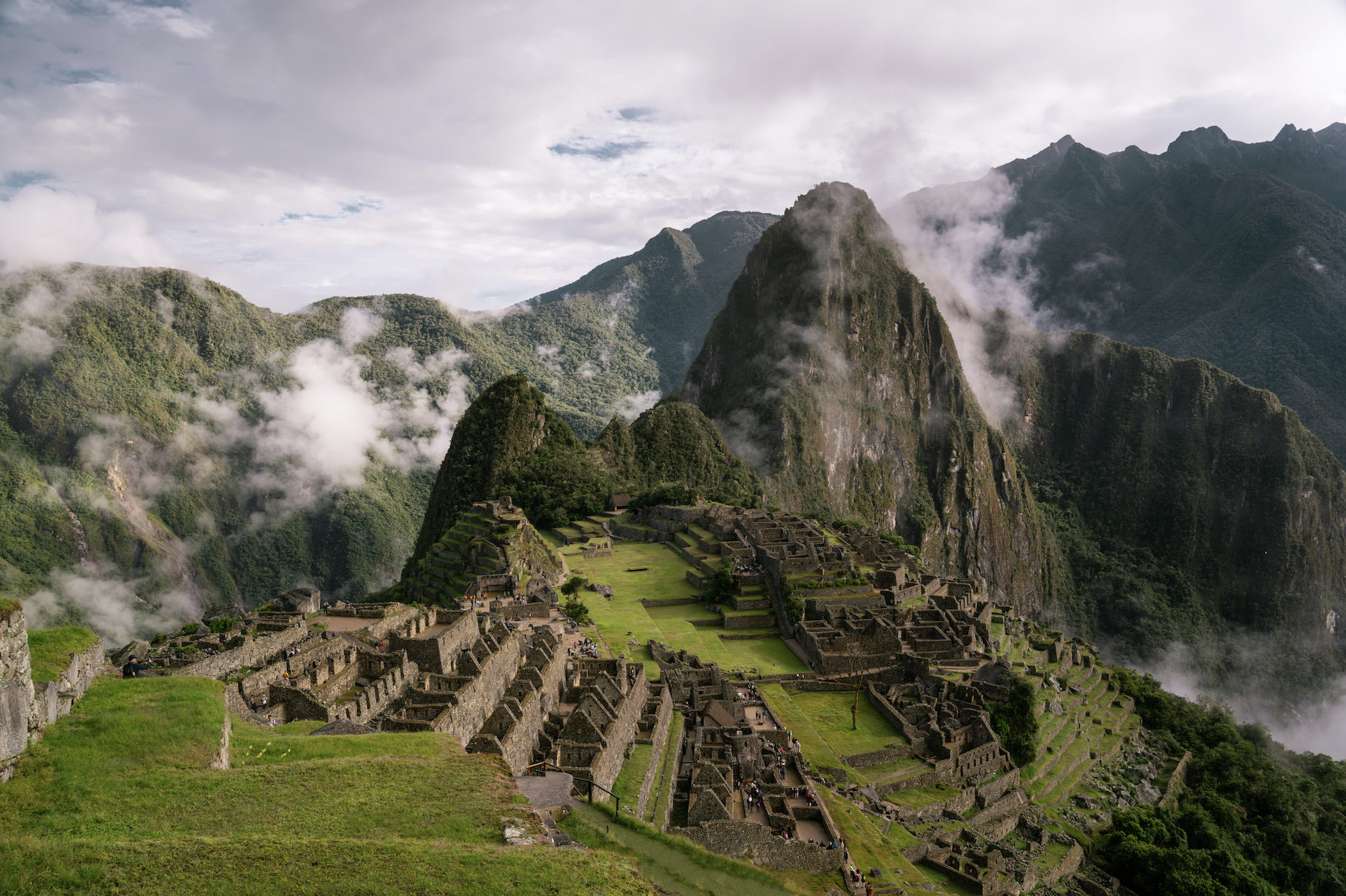
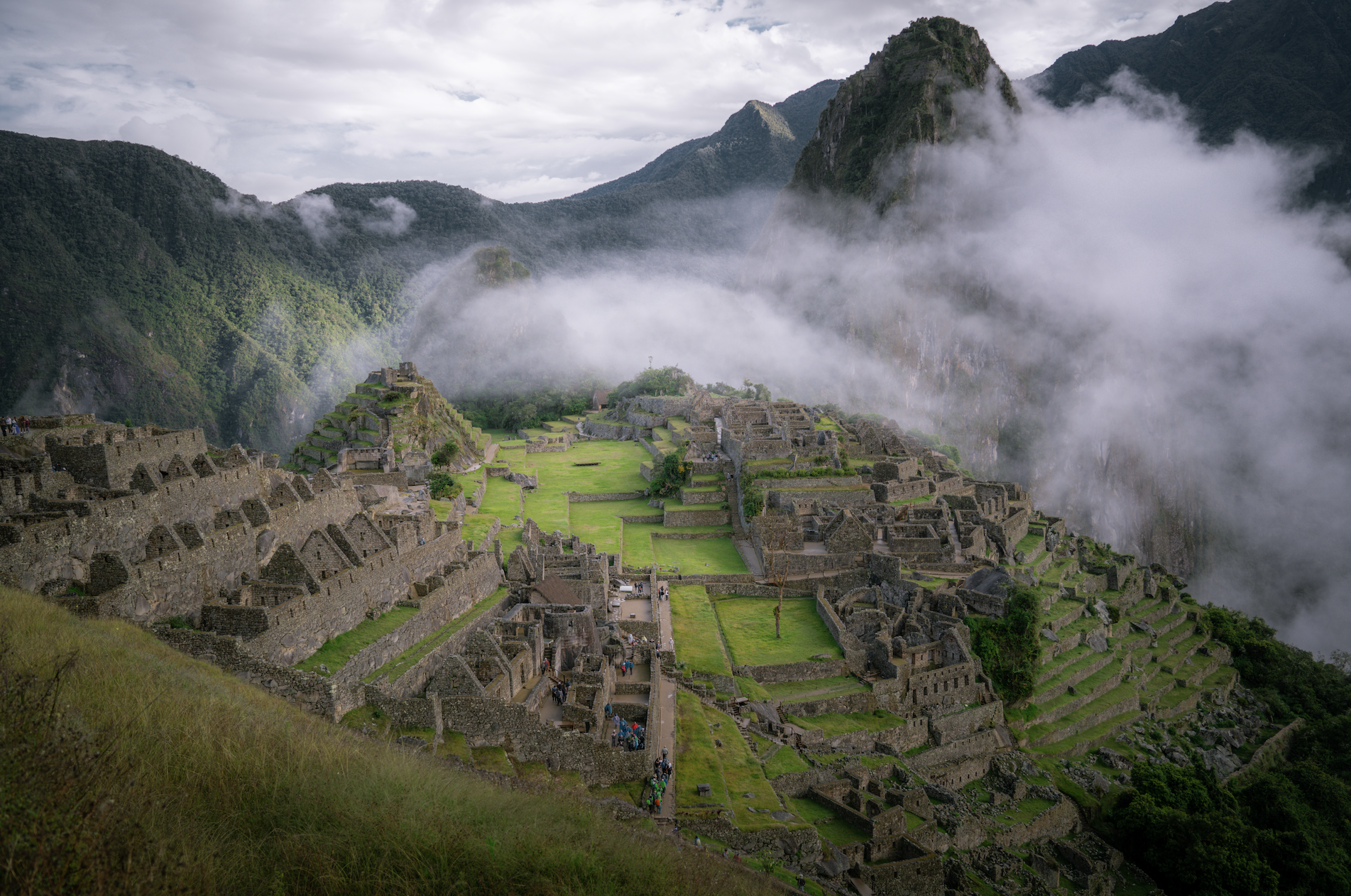
With each muddy step upward, the sky lightened. I looked right, and for the first time my eyes fell on the ruins of Machu Picchu. Everyone around seemed to fall silent. It’s strange seeing views you’ve only seen on posters in real life. Unlike the Colosseum, the Great Wall, or the Taj Mahal, where you know what to expect, Machu Picchu has an element of uncertainty. You need months of planning, tickets in advance, a night in the nearby town, a climb up the mountain, and a bit of luck with the weather. That we now had a stunning view with mystical clouds wrapped around the peaks felt incredible. Half an hour ago, it had all been covered in mist.
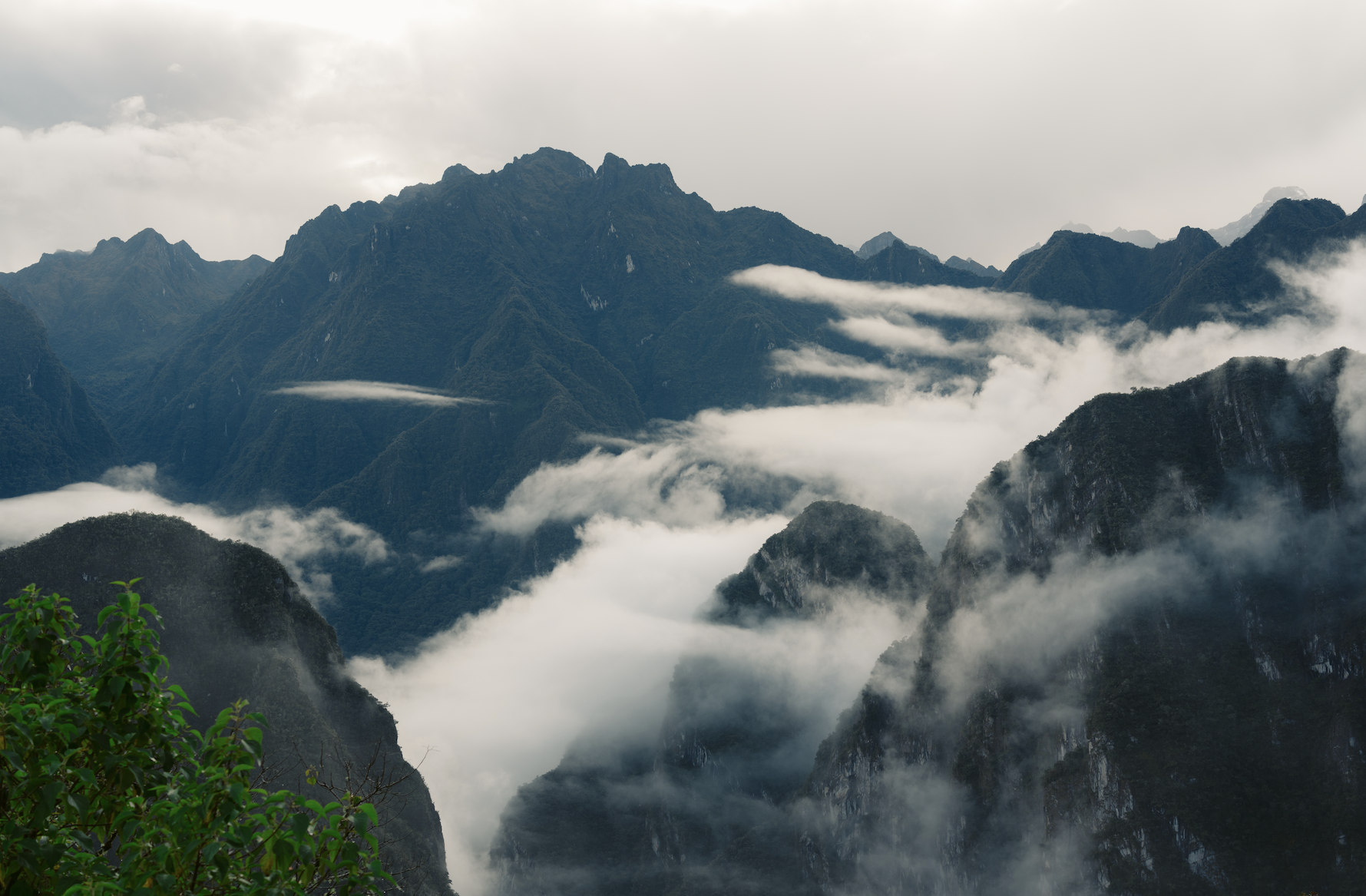
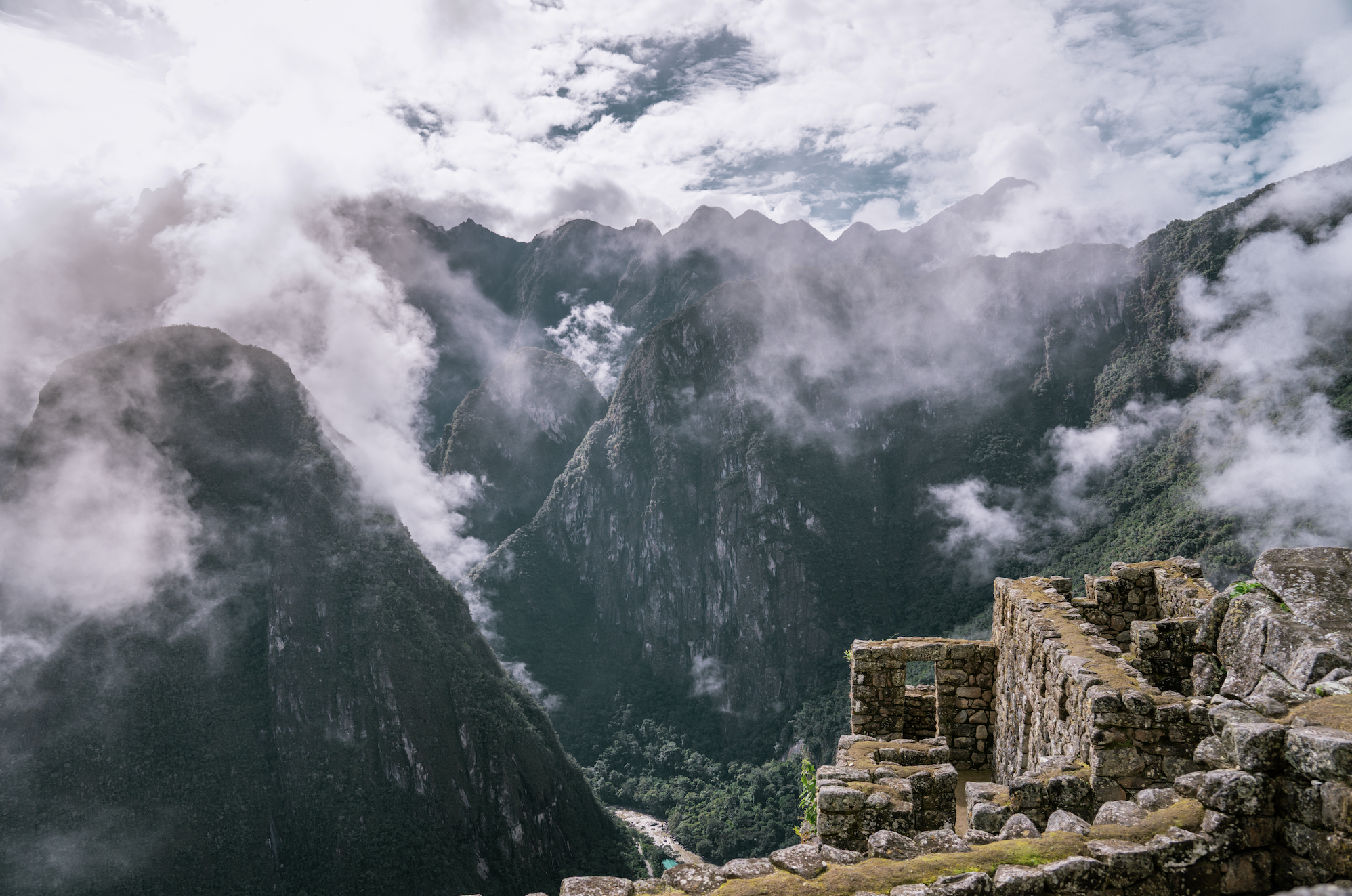
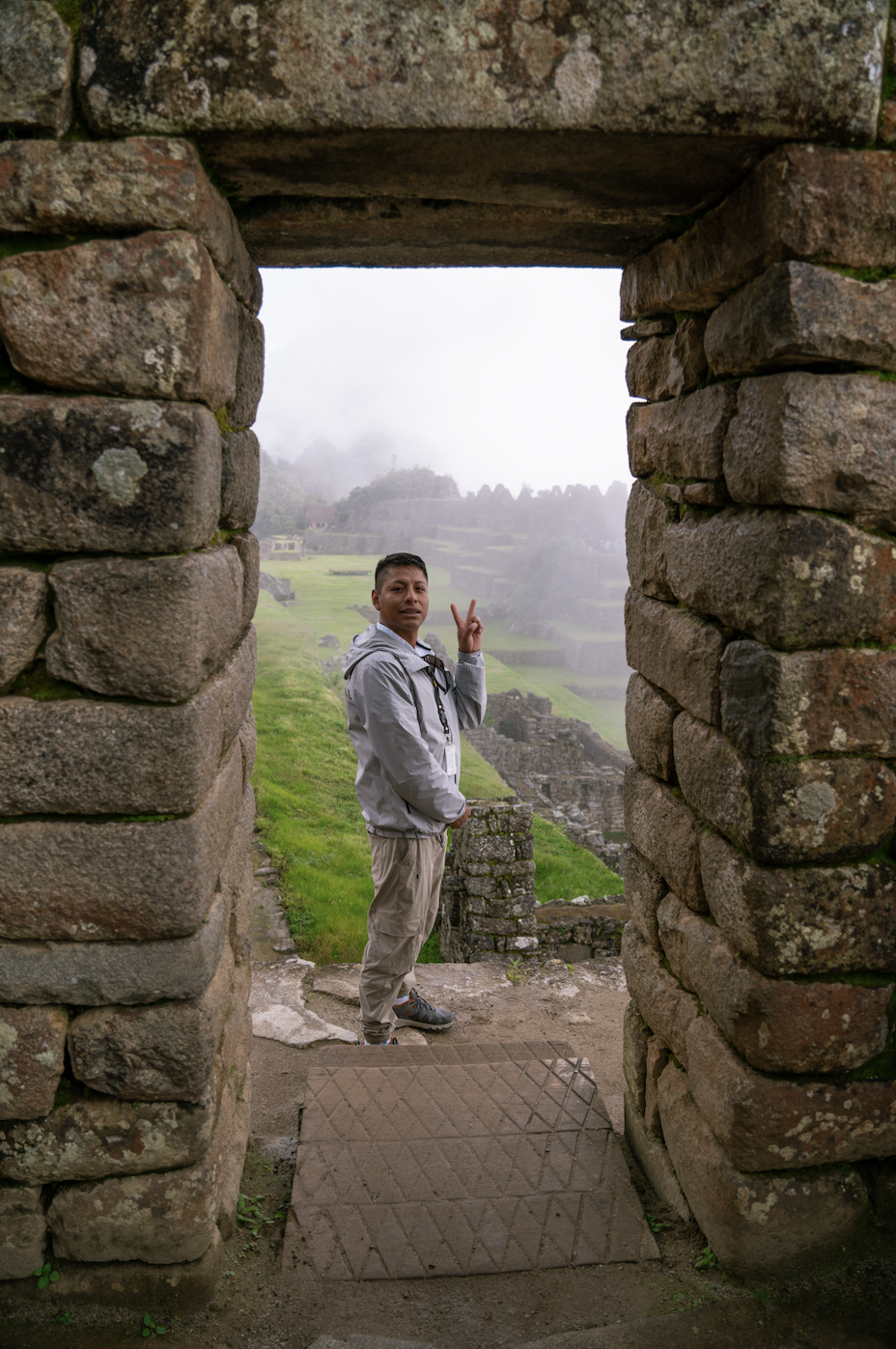
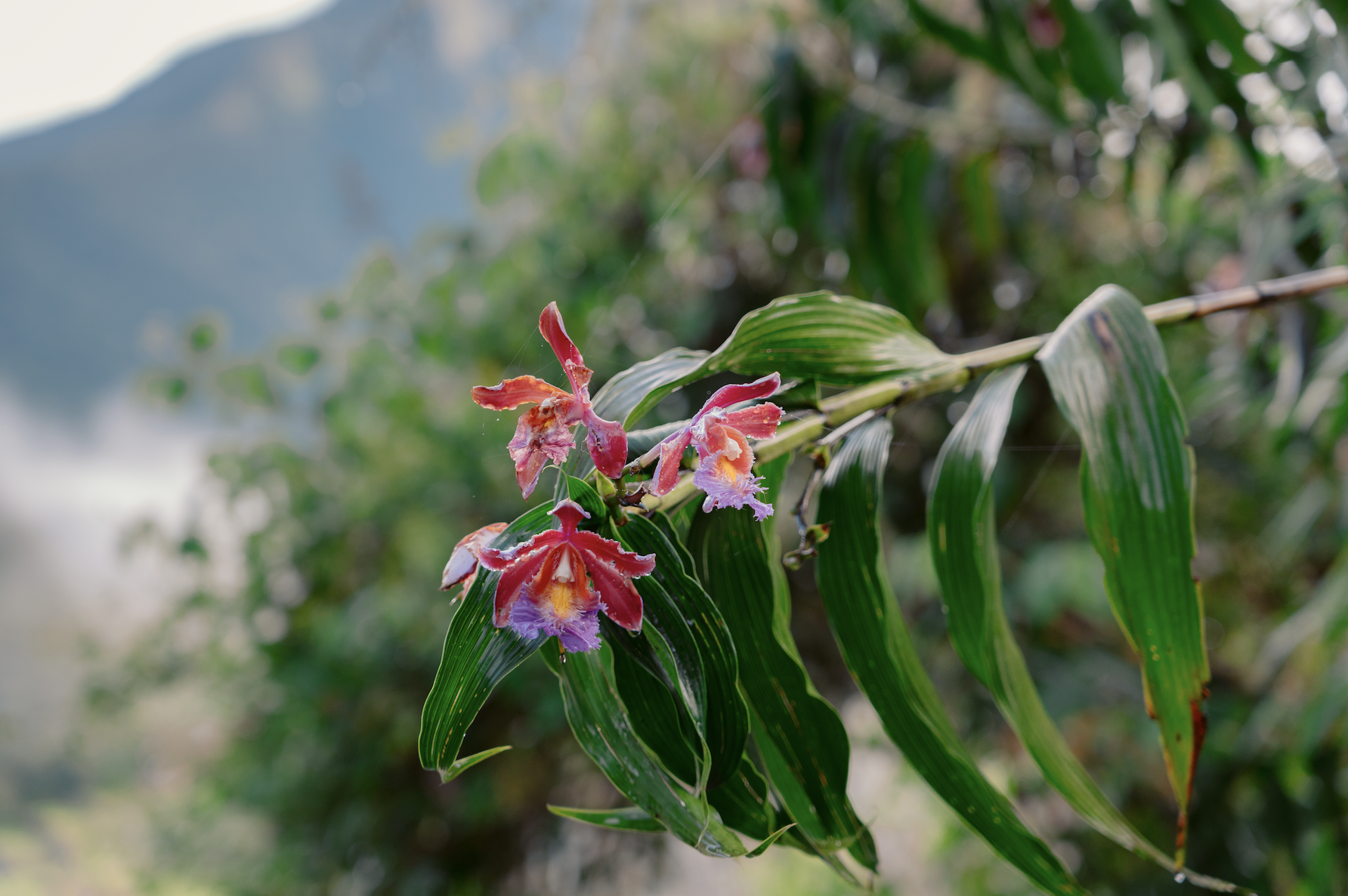
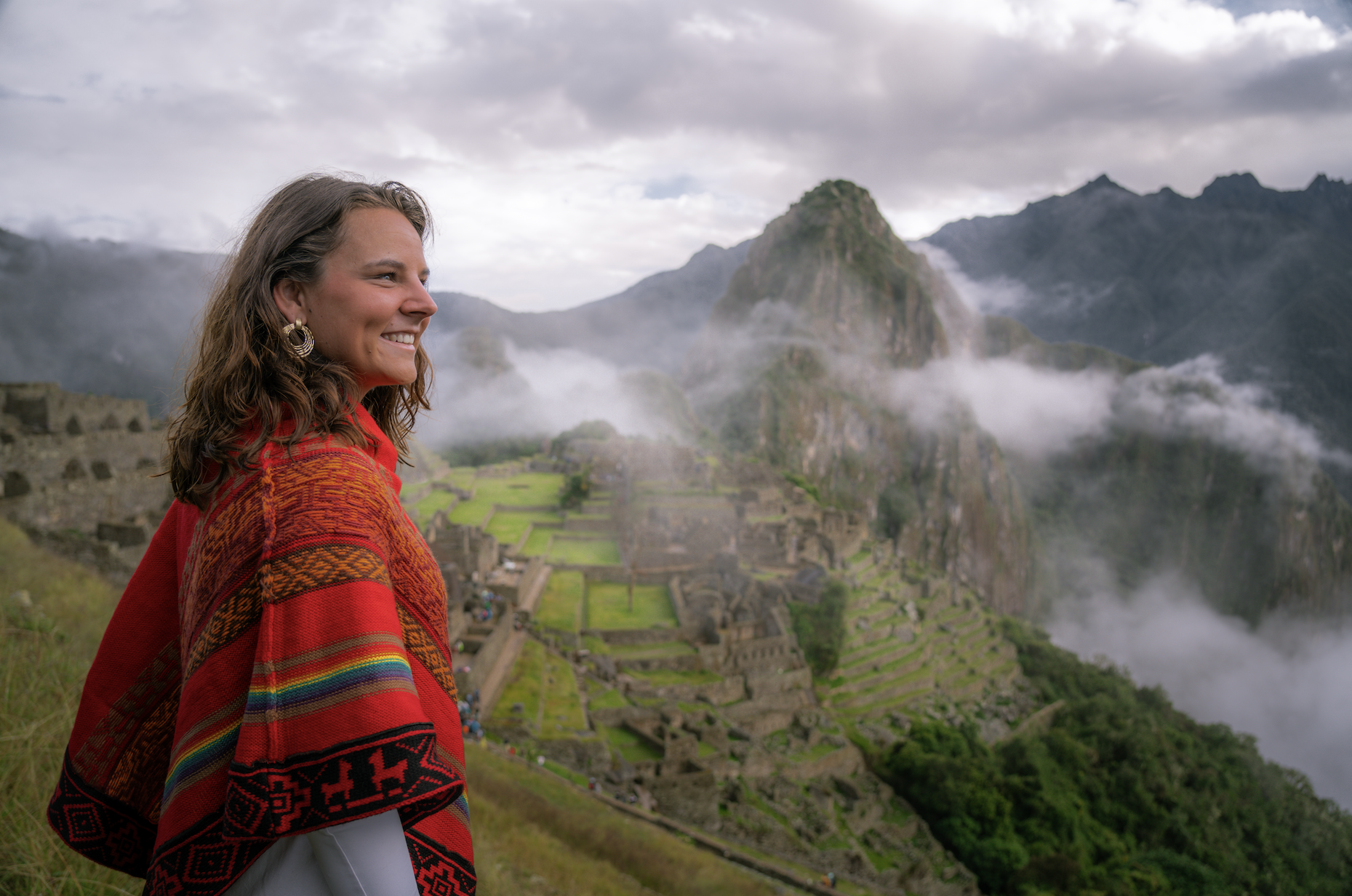
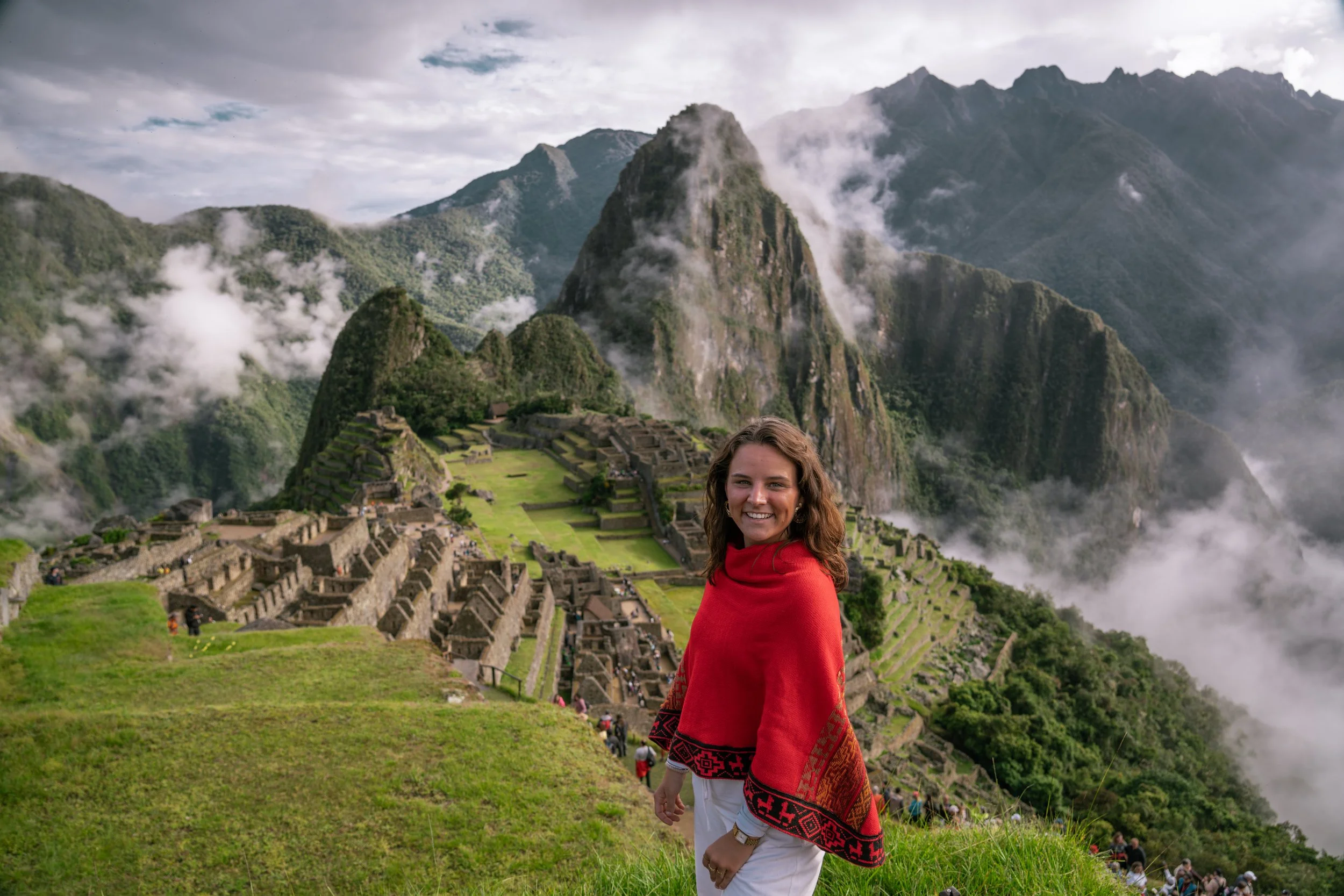
Christian explained the unique flowers growing only here, the stones beneath our feet, and frequently said, “If you want a picture, Evi Anne, you just have to ask.” Once I soaked in the view, I handed him my camera. Suddenly, he transformed into a professional photographer, telling nearby people to step aside and instructing me on poses. My smile in the photos shows just how happy I was. We stopped at the highest viewpoint, taking in the whole city.
Machu Picchu was built by the Inca over 500 years ago. They didn’t use money, only barter. The city wasn’t for the wealthy but for royalty who wanted a retreat outside Cusco. They built on the mountain without leveling it, believing in the power and energy of the earth. Around 300–500 people lived there, with fresh water still flowing through the city and daily deliveries of food from Cusco—a five-day journey by foot.
Christian pointed out the stones and buildings. Some remain unfinished; the Spanish conquest stopped construction. Landslides and earthquakes caused cracks, yet the city’s vastness is astounding—sun temples, water systems, two-story homes, tiny pathways, and farmland. The Inca had advanced knowledge of astronomy; the sun temple aligns with solstices, and the surrounding peaks help track months and seasons.
After lots of photos and videos, it was time to leave. Experiencing Machu Picchu on a private tour was incredible. Christian’s knowledge, the driver, the hostel staff, and the people on the train all added to the experience.
“Thank you so much for the amazing tour,” I said to Christian at the top. He smiled, “I’m glad you were in my group today. It’s been a long time since I enjoyed a tour this much.” I laughed and said goodbye. Then he said, “In Inca language, we don’t have a word for goodbye, only Tupanachis cama, which means ‘until we meet again.’”