When Abnormal Becomes Normal
By Evi Goossens — travel storyteller & creative freelancer
Auckland, New Zealand, November 2025
Reading time: 8 minutes
Humanity never really seemed to stand a chance at survival. We weren’t the strongest, nor the smartest. And yet, we’ve made it over 300,000 years. From ape-like ancestors to humans. From nomadic life to the first settlements. From discovery to sitting forty hours a week under fluorescent lights. When the abnormal becomes normal, at what point do you go insane?
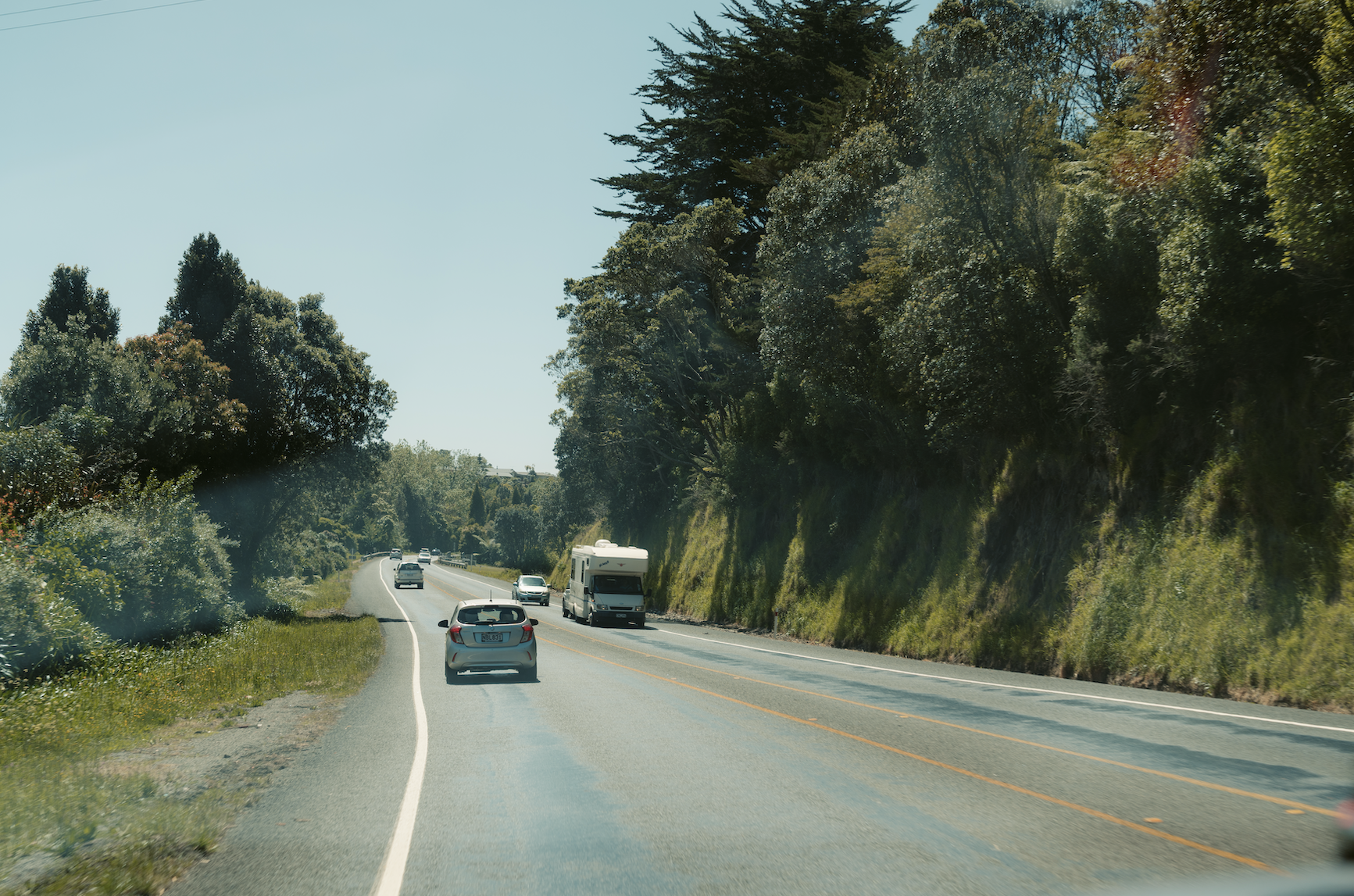
With the double-decker intercity bus, we leave behind Auckland’s high-rises and chaos and head toward Rotorua. The driver gives us a cheerful pep talk, and I’m sitting on the top deck, soaking in the panoramic spring view. As I’m still recovering from carrying 35 kilos on my back, the sunlight breaking through warms my skin. I look at the cars, the road signs — nothing special, you’d think. Yet somehow the combination of it all makes me wonder: what the fck am I even doing?
As the bus takes different turns, the light shifts, changing the warmth of the sun. The vent above my head sends shivers down my arms, and I watch the suburbs slowly come into view. An image that somehow makes me feel even colder. Neighborhoods that look like copy-paste suburbs, as people like to call them. It makes me think.
While people my age are buying houses or getting promotions, I’m hopping around a city on the other side of the world with an overstuffed backpack. What am I really doing? Am I falling behind? Some call it running away, others call it an adventure. I think both groups see it as escaping reality. But what if it’s actually the other way around?
Toes curling, breathing quickening, heart racing, sweating, and then suddenly cold, all reactions to leaving familiar ground behind. The urban landscape slowly changes, and I try to connect it to something I know. Let’s just say tropical England is gradually turning into topical southern Netherlands.
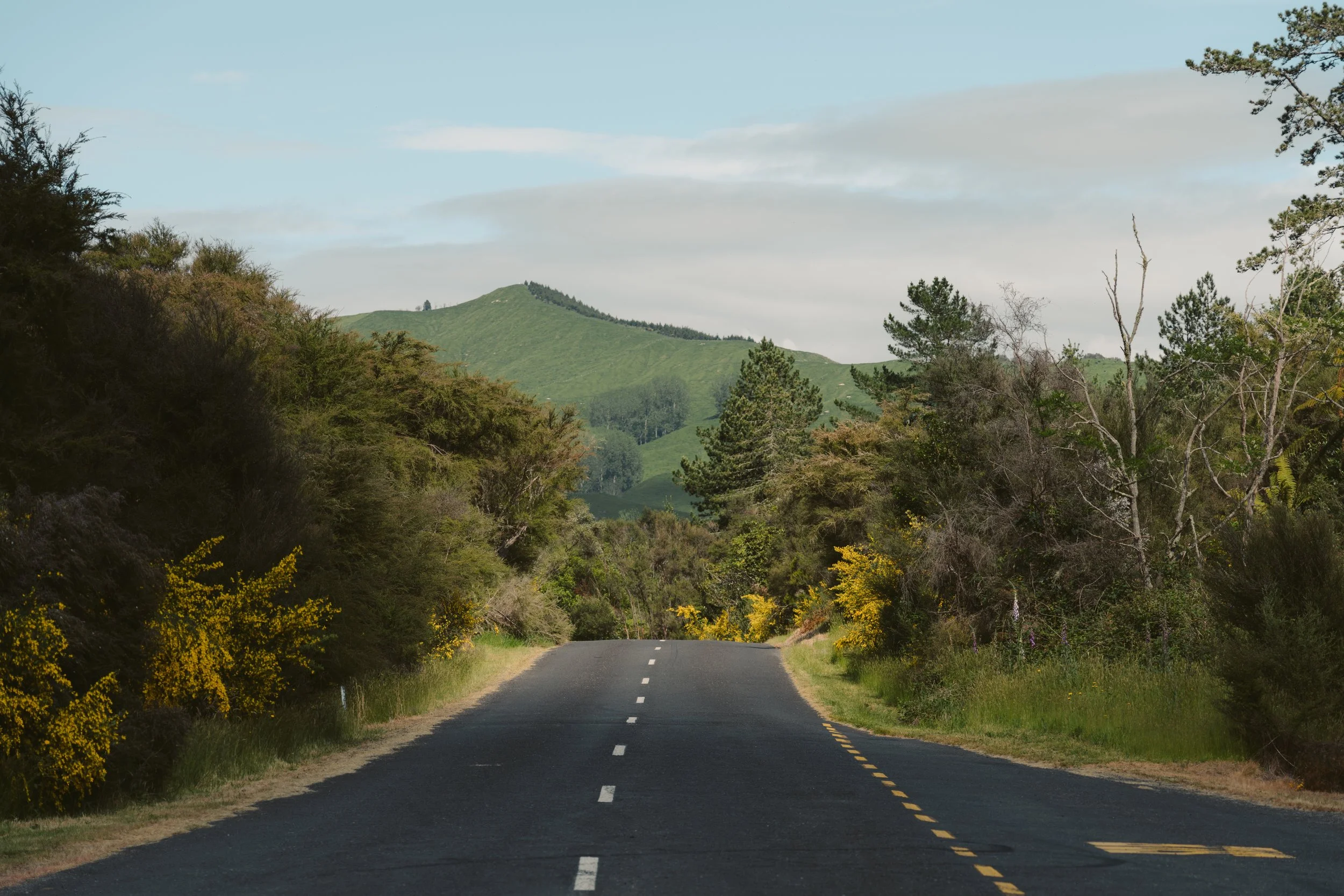
The houses disappear, and the biodiversity of this remote island takes over. What I thought were palm trees for days now turn out to be a completely different species. New Zealand — once Zeelandia — used to be part of a giant continent that broke off from South America, Africa, Antarctica, and Australia. Due to geographical isolation, nature took full control, and as sea levels rose, only the highest peaks of that ancient continent remained. Because New Zealand stayed isolated for so long and never fully sank, ancient plants and animal species survived here that went extinct everywhere else.
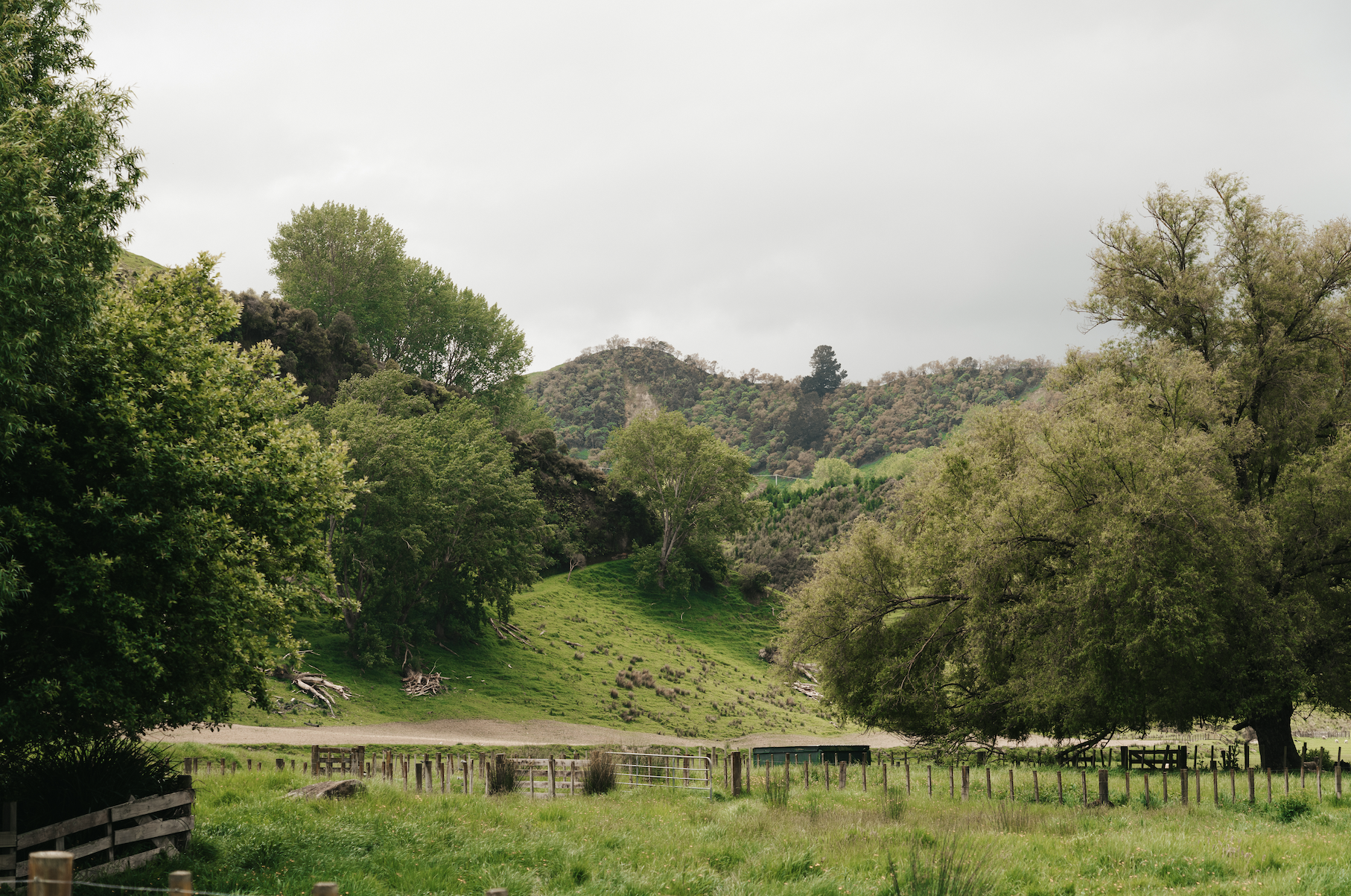
New sights, new cultures, new like-minded people. Sometimes I wonder what reality even is. Looking outside, it feels like I’ve left that station far behind. Southern Netherlands has turned into a landscape straight out of a fantasy novel. The spring sun casts a golden glow over the land, animals roam free, a few water wells appear, and the trees look like they might start talking any second. It literally looks like a fairytale.
Humanity lived nomadically for most of its history. And when I see places like this, I understand why. Only at the very last moment did we decide to settle down — and that changed everything. Now we spend hours under fluorescent lights, rushing from home to work, following the “normal” pattern of buying, working, living… as if that’s the natural order. For centuries, we’ve been numb in our Western paradise. But what if we’ve been wrong all along?
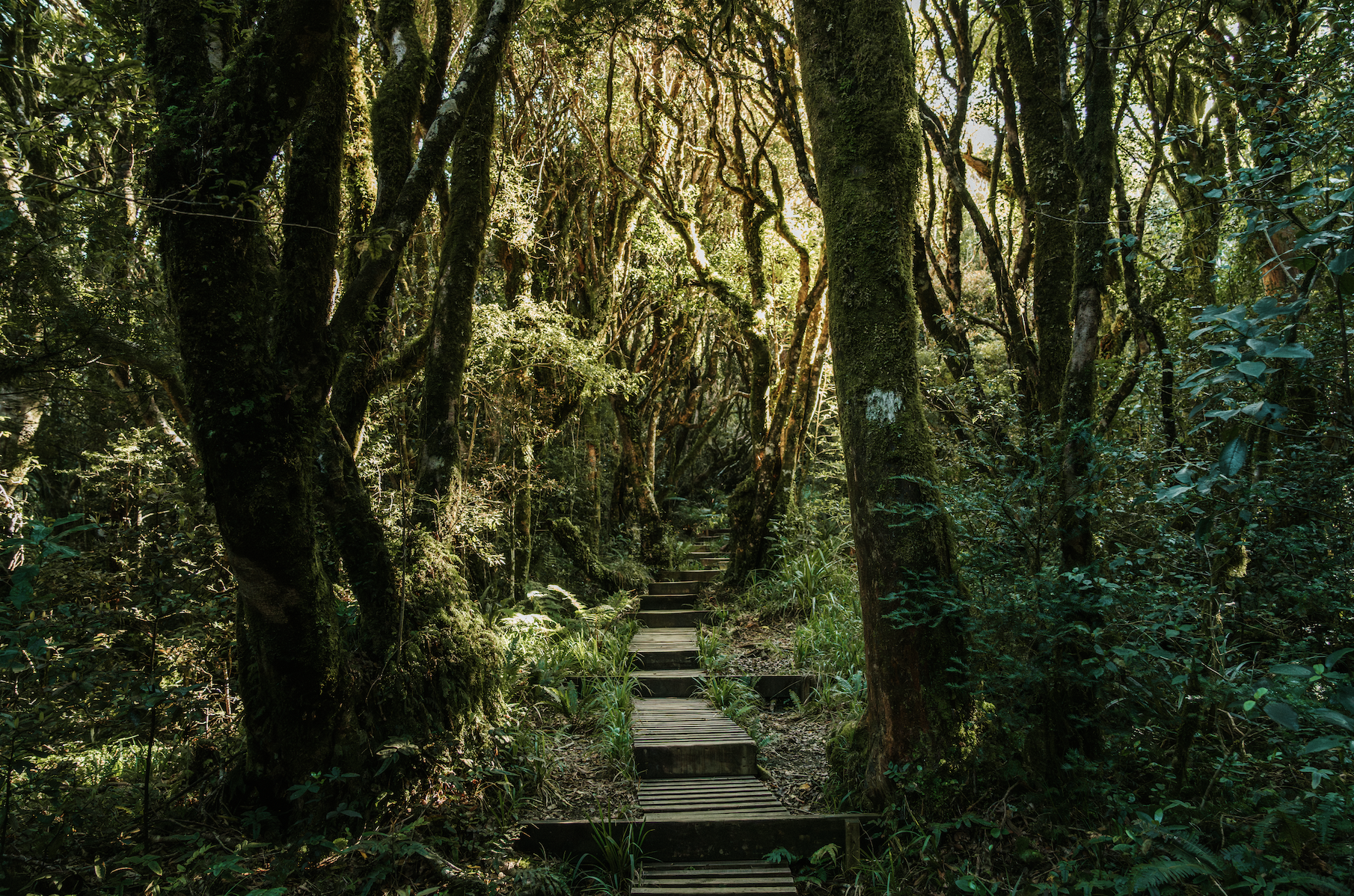
As children, exposing ourselves to new experiences was perfectly normal; everything was new. As adults, we unlearn and forget that. Doing new things becomes scary. We take three weeks off a year to recover from our “normal” lives. We prefer to stay in our comfort zones and only leave them when forced. Yet science shows that seeking new stimuli and stepping outside our comfort zone actually stimulates the brain, enhances creativity, and strengthens us psychologically.
Humans are evolutionarily wired to be nomadic, to explore new territories. New scents, colors, sounds, tastes, and temperatures train key parts of our brain responsible for memory and neuroplasticity, our ability to form new connections. Those who step outside their comfort zone more often strengthen their self-confidence, resilience, and problem-solving abilities. Navigating new environments even grows our hippocampus, proving that exploration can literally lead to physical growth in the brain. By stepping away from routine, we open the door to creativity and social development. Maybe that’s why traveling feels so addictive.
I’m not saying travel is the only way to wake yourself up from the sleepwalking state we Westerners cling to so tightly. I just think we shouldn’t confine ourselves to rigid frames of what’s normal and what’s not. Both happiness and evolution show that extraordinary things can emerge when we break those limits. Humanity is one example — but so is the fairytale-like landscape of remote New Zealand. We live by standards we’ve imposed on ourselves, always in the superlative. When are we supposed to have “made it,” according to society? When we buy a house? Land a great job? Earn a master’s degree? Drive a nice car? The answer to that question of success never really comes.
Sometimes you need to isolate yourself so that a beautiful, diverse landscape can emerge. Sometimes you need to leave your comfort zone to regain confidence and resilience. And sometimes, what’s “abnormal” is actually perfectly normal — and what’s seen as “normal” might be the real abnormality. We should examine ourselves and our ways more critically. The art lies in not judging what we don’t yet understand.
I have none of those things — I write stories on the road, sometimes paint, and take photos. I don’t own a house, I no longer have a job, no master’s degree, no car. The feeling of discomfort sometimes creeps under my skin. I don’t know what this journey will bring, or who I’ll be when I return. What I do know is that I’m not behind, nor ahead. It’s not a race you can win. Not a competition with medals. Not running away, but not sleepwalking either. Everyone’s on a different bus, on a different road. Whether it’s a highway to work or a side quest to the other side of the world.
Just a different path than most. Not ahead, not behind — just a completely different highway. One that few people drive on, but maybe, eventually, it’ll merge with the rest.
Until then, I’ll enjoy this side quest.